Auction Sheet Guide
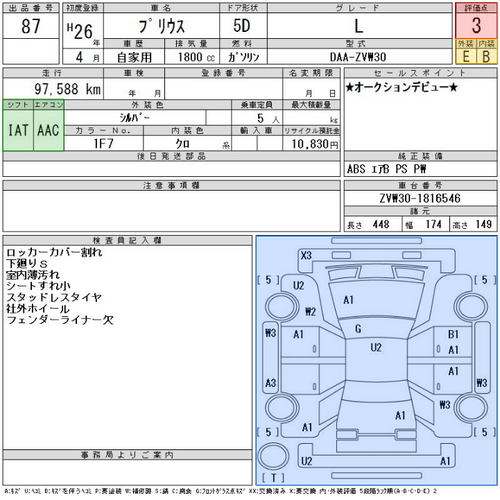
Learn how to read Japanese auction sheets — the standardized document that reveals a vehicle's true condition, grade, and history before you bid.
The auction sheet serves as a crucial tool in vehicle auctions, offering a standardized way to evaluate and communicate the condition and history of vehicles to potential buyers. It allows buyers to assess vehicles remotely, ensuring transparency and informed decision-making.
Purpose
Provides detailed information for potential buyers in vehicle auctions.
Content
Includes specifics such as make, model, year, mileage, and color.
Condition
Assesses exterior (scratches, dents, rust, paint) and interior wear & functionality.
Mechanical
Notes engine, transmission, suspension, and brake conditions.
Grade
Rates overall condition from S (excellent) to 1 (poor).
History
Indicates accident history and extent of repairs (minor to major).
Additional
May include modifications, aftermarket parts, or special features.
Use
Helps buyers make informed decisions without physical inspection.